

Sandwich panels are an essential building material for cladding industrial, storage, production, multi-purpose, and other commercial buildings. Today, these buildings often need to meet high standards for energy efficiency, fire resistance, and creative architectural design. Many high-quality types of sandwich panels are available to meet all these requirements.
A sandwich panel essentially consists of two layers of galvanized steel sheet with insulating material between them. Wall and roof panels have different external profiles adapted to their intended use. Sandwich panels also differ in the type of insulation, which may be polyurethane foam or mineral wool, and in thickness, usually from 50 to 240 mm.
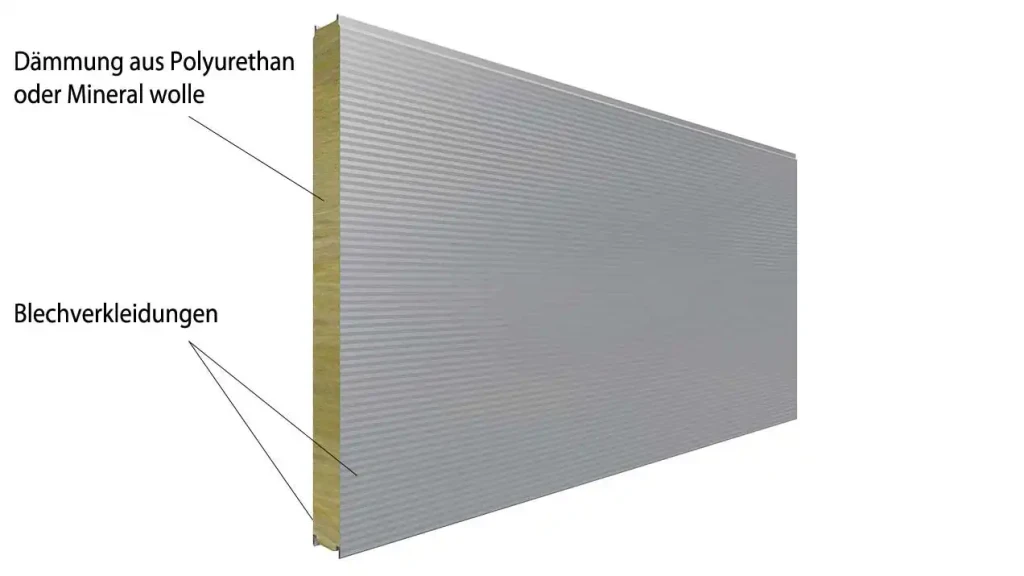
Composition of a Wall Sandwich Panel
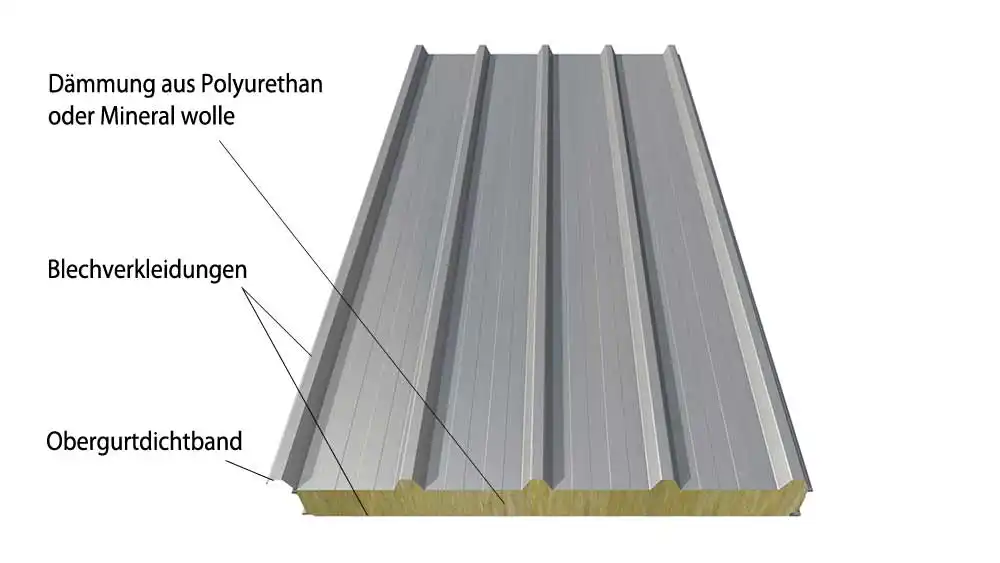
Parts of roof sandwich panel
Advantages of Using Sandwich Panels:
- Mechanical resistance: Sandwich panels are extremely strong and resistant to mechanical loads. Together with the building’s steel structure, they can withstand the weight of snow while retaining their shape without deformation or damage.
- Weather resistance: They are designed to withstand extreme weather conditions such as precipitation, wind, and temperature fluctuations, ensuring a long service life and durability.
- Fire resistance (mineral wool core): Sandwich panels with mineral wool insulation are highly fire-resistant. This feature contributes to the safety and protection of the building in the event of a fire.
- Thermal and acoustic insulation: They provide excellent insulation, helping to maintain the building’s internal temperature and reduce energy loss. They also provide effective sound insulation, which is important in production environments.
- Modern appearance (colour combinations and concealed joints): They provide design freedom and an aesthetically pleasing appearance. Panels are available in various colours and profiles. Concealed joints between panels create a uniform facade that gives the building a modern and sophisticated look.
- Lightweight and easy to install: Sandwich panels are lighter than many other building materials, making them easier to transport and install. They do not require extensive additional support and are attached directly to the hall’s structural elements, saving time and money during construction.
Use of Insulated Sandwich Panels in Schwarzmann Halls
At Schwarzmann, we use sandwich panels to clad our insulated steel halls.
The choice of sandwich panel type and manufacturer depends on:
- the required insulation properties of the building,
- the intended use,
- the required fire resistance, as well as the desired external appearance and price.
Our experienced local sales advisers can recommend the best selection of sandwich panels for your hall.
Examples of Sandwich Panel Applications
Panels are a highly versatile cladding material that provides different levels of insulation, flexibility in appearance, fire resistance, and sound insulation. They are therefore suitable for cladding buildings used in many different applications and industries.
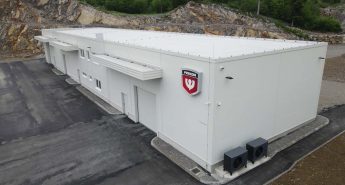
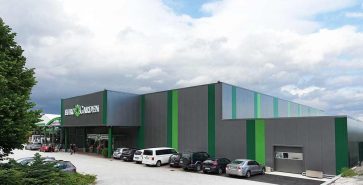
At Schwarzmann, we use them for everything from simple insulated storage and production halls to more complex multi-purpose office and commercial buildings and aircraft hangars. Here are a few examples:




FAQ – Frequently Asked Questions
- What are sandwich panels?
Sandwich panels consist of two outer layers of galvanized steel sheet with a layer of insulating core material, such as mineral wool or polyurethane, between them.
- What are sandwich panels used for?
Sandwich panels are used to clad industrial, production, storage, business, and other commercial buildings that require good insulation.
- How do sandwich panels differ?
Sandwich panels differ in how they are joined, depending on whether they are intended for a roof or a wall. They also differ in insulation type (mineral wool or polyurethane) and insulation thickness (from 50 to 240 mm). Depending on the manufacturer, they are available in a wide range of standard RAL colours or custom shades.
- How much do sandwich panels cost?
The price of sandwich panels depends on the manufacturer and the panel specifications, including insulation thickness, colour, and intended use. As part of the project, we usually define the panel type and obtain a quotation from the manufacturer, including installation costs in the final offer.