

Fire safety regulations for warehouses are among the most important factors that must be considered when constructing warehouse buildings. To obtain all required permits, every applicable fire safety regulation must be met and the safety of the new building must be ensured.
Fire safety is a complex field and is therefore handled by experts who prepare a fire safety study and implementation recommendations. These requirements must be considered when designing the warehouse. This article provides only a basic overview of the topic. For details concerning a specific building, consult a fire safety expert and verify which regulations apply at the particular location. Regulations change frequently and also depend on the size of the warehouse and the type of materials being stored.
In Austria, fire safety requirements for warehouses are mainly governed by the Federal Fire Services Act (BFG). This act sets out the general principles, while specific requirements for warehouses are described in the Austrian Technical Guidelines for Fire Safety (ÖNORM F 3000 series).
Fire safety in warehouses and the materials used
Before planning the construction of a warehouse, you need to consider the construction method and the materials. In addition to the quality and usability of the building, the cost efficiency of the structure is also very important. Fire safety must never be overlooked. Depending on your fire safety requirements, Schwarzmann can advise you on selecting the appropriate warehouse and provide a customised solution.
For insulated warehouses, mineral-wool insulation panels with low flammability are used as cladding. For fabric storage buildings, a non-combustible PVC membrane with a B1 classification can be used.
When steel structures are used, there are several ways to adapt the fire protection of the building:
- The steel structure can be protected with a fire-resistant coating or fire protection boards,
- the structure can be oversized to withstand the required fire loads,
- a larger building can be divided by a fire-resistant wall, and so on.
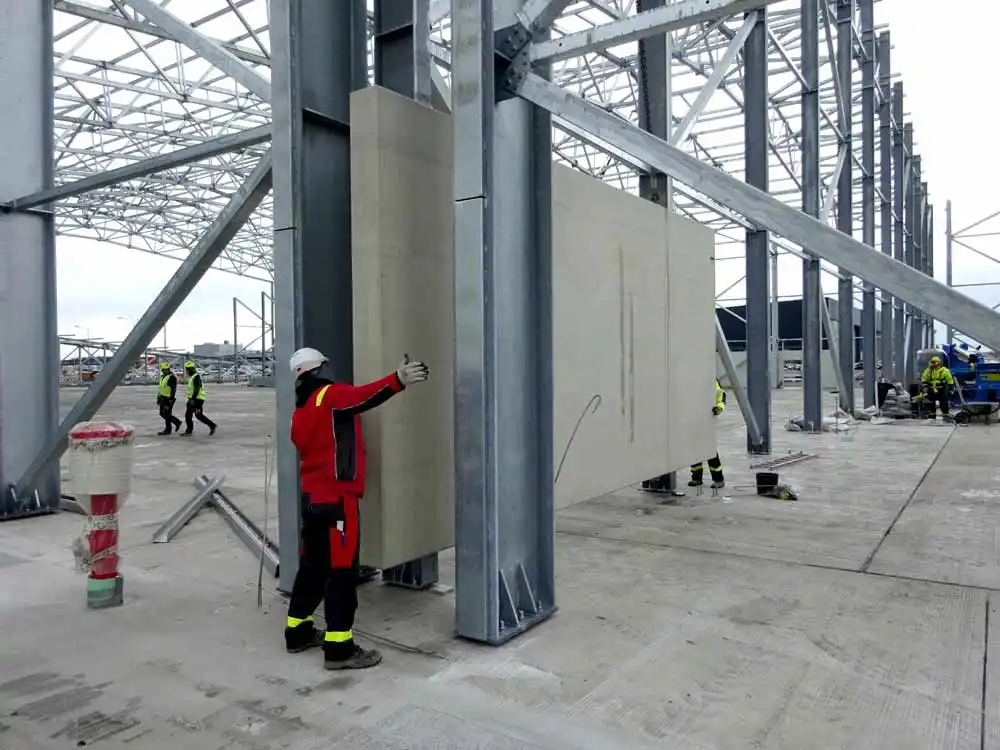
Fire wall
Strategies for improving fire safety in warehouses
A thorough and carefully considered approach to planning safety measures is essential for effective fire protection in warehouses. Fire safety strategies are divided into active and passive measures:
Passive safety measures:
Passive measures are intended to prevent fires from starting and spreading. They include:
Organisational measures:
These measures include:
- appointing persons responsible for fire safety,
- regular staff training and instructions,
- preparing and updating evacuation plans, and
- clear instructions for dealing with emergencies.
Technical and system measures:
Large buildings or facilities that store valuable goods require advanced technical fire suppression systems. These include the installation and maintenance of smoke and gas detectors, modern sprinkler systems, heat and smoke exhaust systems (automatic roof domes), and portable fire extinguishing equipment.
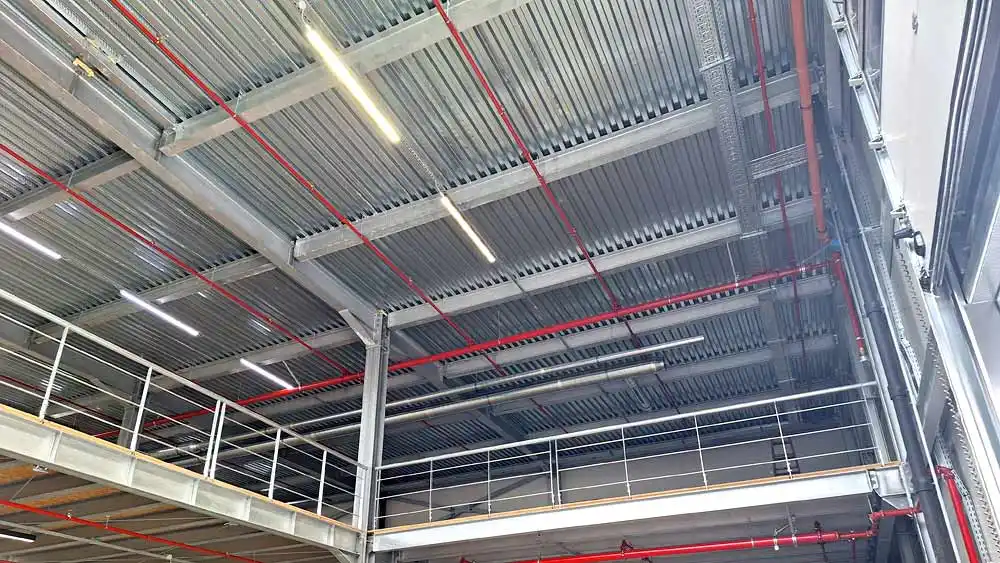
Sprinkler system (red)
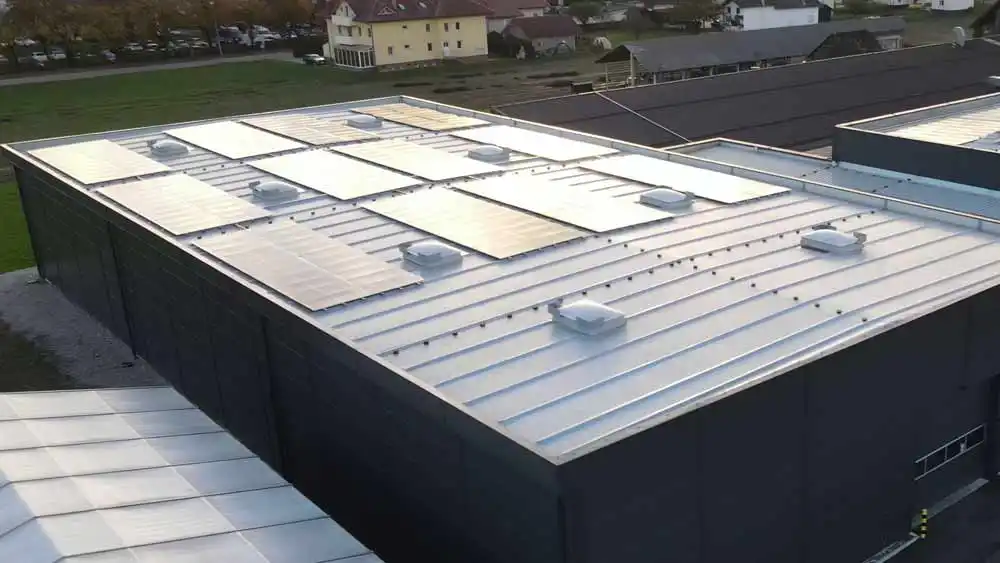
Smoke-extraction rooflights
Safety solutions for halls:
Effective fire protection begins during the building design phase. All structural elements should be designed to minimise the risk of fire and enable rapid evacuation in the event of an emergency.
Active safety measures:
When a fire breaks out, active measures are essential for limiting damage inside the building and ensuring people’s safety. These include using fire extinguishers, activating ceiling-mounted sprinkler systems, evacuating people from endangered areas, and ensuring a rapid response by the fire brigade.
By effectively combining passive and active fire protection measures, companies can significantly reduce the risk of fire and its potentially devastating consequences.
Regular inspections of fire safety measures in the building, their adjustment to current regulations, and employee awareness and training regarding conduct in the event of a fire are essential.
Contact us for a consultation and request a quote for a warehouse tailored to the fire safety requirements of your products and your company!
FAQ
- What are the basic fire safety regulations for warehouse construction?
When constructing a warehouse, you must comply with local and national fire safety regulations. These regulations cover evacuation plans, the selection of construction materials, and the design of fire suppression measures. We recommend consulting a fire safety expert to determine the exact requirements for your location.
- Which materials do you recommend for constructing a fire-safe warehouse?
For fire-safe warehouses, we recommend non-combustible materials such as mineral wool insulation and steel structures with a fire-resistant coating. Larger buildings can also be divided by fire-resistant walls to further reduce the risk of fire spreading.
- What is the difference between passive and active fire protection measures?
Passive fire protection measures include all measures that prevent a fire from starting or spreading, such as selecting non-combustible materials and using an appropriate architectural design. Active fire protection measures include firefighting equipment and strategies such as fire extinguishers, ceiling-mounted sprinkler systems, and rapid evacuation plans. Both types of measures are essential for ensuring overall fire safety in warehouses.